








There is broad consensus across European capitals that the current geopolitical and geoeconomic challenges require a strong and competitive Europe with the capacity to act. In recent years, the European Union’s political and strategic focus has shifted noticeably East and North-East. The security experiences of these regions are now shaping key European debates. The central challenge, however, is to translate these perspectives into common responses and develop viable solutions for Europe as a whole.
The cooperation between Germany, Sweden, and Finland exemplifies one of Europe’s greatest strengths: its ability to learn from one another and exchange best practices. This is particularly evident in the field of defence, where the Nordic countries are contributing valuable experience through their total defence concepts, which is now also informing discussions within NATO. NATO will remain the cornerstone of European defence, even as efforts to strengthen the European dimension within the Alliance are gaining importance. Continued support for Ukraine remains a top priority and ensuring its long-term financial sustainability is a key element in the negotiations on the next Multiannual Financial Framework.
Against the backdrop of the current geopolitical situation, EU enlargement has returned to the top of the EU agenda. It was argued that the question is no longer whether the EU should enlarge, but rather when. Through its proposal for an associated membership for Ukraine, the German government is seeking to inject new momentum into the debate. The Nordic countries welcome this renewed impetus. At the same time, there is broad agreement that accession processes must remain merit-based and that full membership should remain the ultimate objective.
Another key priority is strengthening the Single Market, reducing regulatory burdens, AI investments and advancing the green transition. At the same time, the EU requires effective instruments to respond more rapidly and decisively to distortions in the global geoeconomic environment. Economic stability, clearly defined democratic values and continued climate leadership enhance the attractiveness of the European Union both for its citizens and for partners around the world.
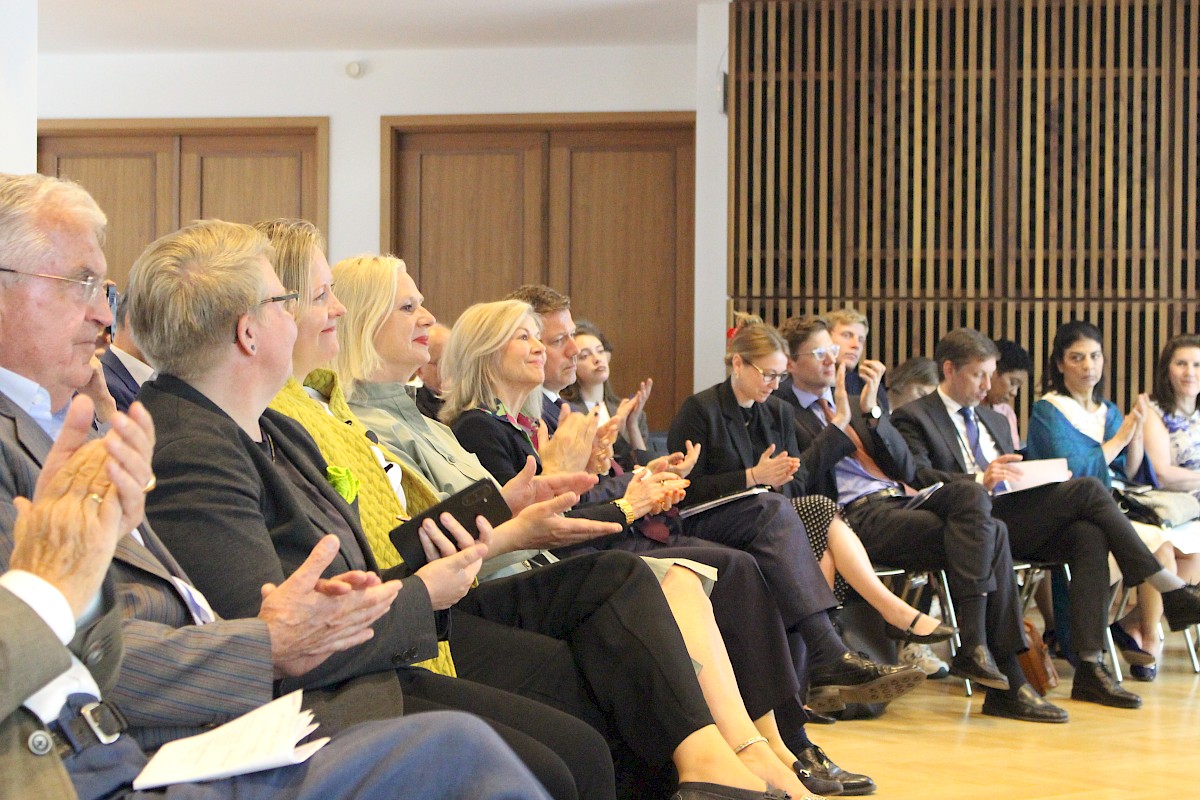
These and other issues were discussed at the IEP Europe Talks with Michael Clauß, Adviser on European Affairs to Chancellor Merz, Christian Danielsson, State Secretary in the Office of the Swedish Prime Minister and Minna Kivimäki, State Secretary for EU Affairs in the Office of the Prime Minister of Finland. Following opening remarks by Dr Barbara Gessler, Head of the Representation of the European Commission in Germany, the discussion was moderated by Prof Dr Funda Tekin, Director of IEP. The event was organised in cooperation with the Embassy of Sweden in Berlin and with the kind support of the Federal Foreign Office.
-

Panel
-

Funda Tekin, Christian Danielsson, Minna Kivimäki and Michael Clauß
-
-
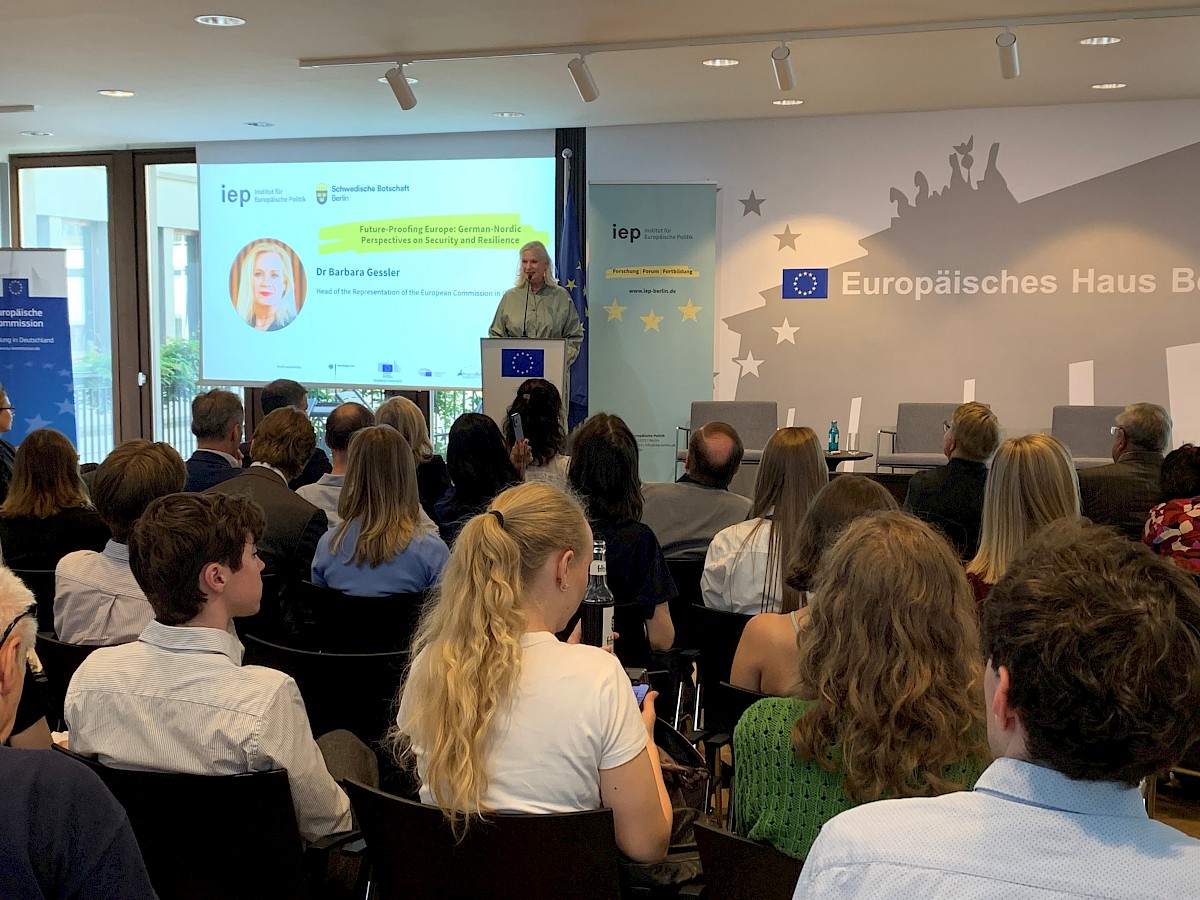
Dr. Barbara Gessler
-

-

Prof. Dr. Funda Tekin
Team & authors


 Share publication