








EU enlargement is back on the political agenda and is increasingly being viewed as a geopolitical instrument. At the Europagespräch, Funda Tekin, Director of the Institute for European Politics (IEP), and Markus Knauf, Head of the EU Enlargement Division at the German Federal Foreign Office, discussed the opportunities and challenges of a new round of enlargement.
The discussion focused on how the EU can respond to the changing geopolitical environment without compromising its fundamental accession criteria. While enlargement is widely regarded as an important contribution to Europe's stability, Funda Tekin stressed that the rule of law, democracy, and the capacity for reform must remain at the heart of the accession process.
At the same time, pressure is mounting on the EU to prepare its own institutions for a larger Union. Particular attention was given to reforms of decision-making procedures and to options for the gradual integration of candidate countries, allowing them to benefit from closer cooperation with the EU before full membership is achieved.
One message emerged clearly: the future of EU enlargement will depend not only on the reform efforts of candidate countries but also on the EU’s ability to preserve its own capacity to act.
The Europagespräch took place on 20 June 2026 as part of the Federal Foreign Office’s Open Day. The discussion was moderated by Laura Christoph, Research Fellow at the IEP.
-

Panel in the Weltsaal at the Federal Foreign Office
-

Markus Knauf, Funda Tekin and Laura Christoph
-

Foreign Minister Wadephul at the IEP stand
-

IEP information stand at the Federal Foreign Office’s open day
-
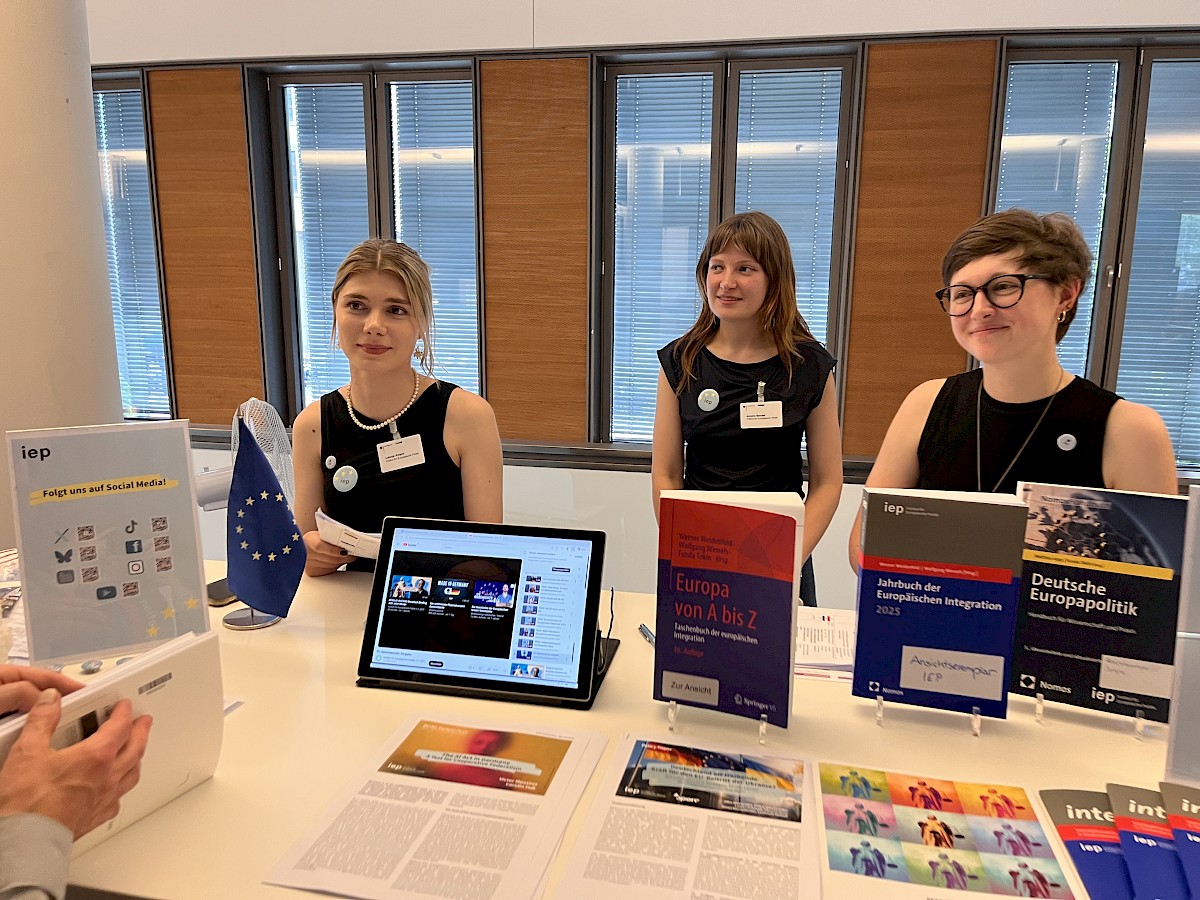
The IEP team
Team & authors


 Share publication