








Between the completion of the EU screenings on 30 September 2025 and the publication of the Enlargement Package in November, representatives from politics, academia and civil society met in Berlin on 16–17 October 2025 for the Multistakeholder Dialogue “Pathways to Progress”. The event aimed to take stock of rule of law reforms in Ukraine, discuss political blockades in the accession process, and provide fresh impetus for the German debate on EU enlargement.
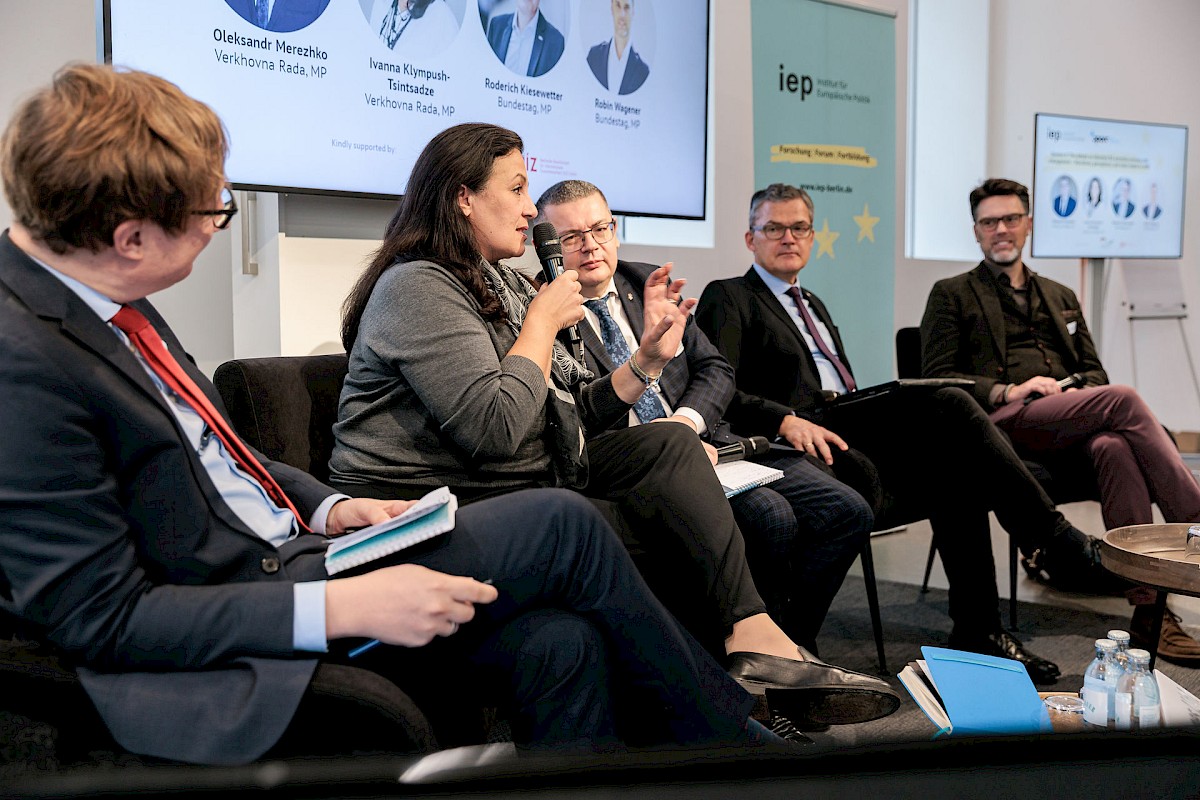
The two-day programme fostered both expert exchange and interparliamentary dialogue. A high-level delegation from the Verkhovna Rada of Ukraine, including Oleksandr Korniyenko, Ivanna Klympush-Tsintsadze, Oleksandr Merezhko, and Inna Sovsun, travelled to Berlin for the discussions.
On 16 October, the Ukrainian delegation visited the Federal Foreign Office and the Embassy of Ukraine. They then met in the Bundestag with nine members of the Committee on European Affairs and the German-Ukrainian Parliamentary Friendship Group, led by Johannes Schraps (SPD) and chaired by Robin Wagener (Alliance 90/The Greens). Further meetings were held at the Federal Ministry for Economic Cooperation and Development (BMZ) and the Federal Chancellery, focusing on German-Ukrainian cooperation in the context of the accession process.
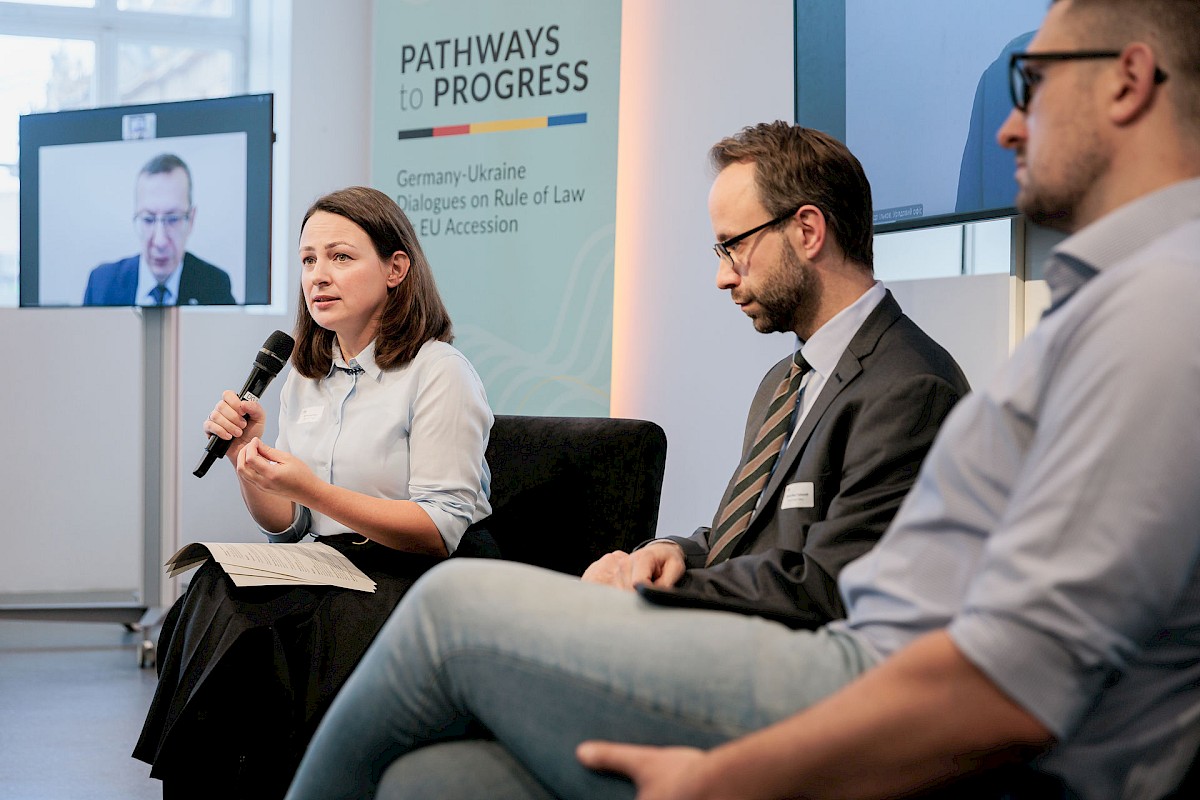
The parliamentary exchange continued on 17 October during a workshop featuring three thematic sessions. Participants discussed progress within the Fundamentals Cluster, possible ways to overcome Hungary’s blockade of the opening of the corresponding negotiation chapter, and immediate steps to sustain reform momentum in Ukraine and the overall dynamics of enlargement. Another focal point concerned prevailing narratives about enlargement in the EU and Germany, and how to address stereotypes and close knowledge gaps.
It was emphasised that Ukraine acts de facto as a defender of the European political architecture, yet remains de jure without formal guarantees. At the same time, the political blockade of the first negotiation chapter weakens the EU’s leverage to advance crucial reforms — time that Ukraine cannot afford to lose amid war. Participants also stressed that the EU and Germany can learn from Ukraine in many respects, particularly from its resilience and innovative capacity. Fear and uncertainty about the EU’s own capabilities often overshadow the potential benefits of Ukrainian accession.
The participants developed concrete recommendations for strengthening reform progress in Ukraine and for new communication strategies targeting German audiences, aimed at increasing public support for Ukraine’s EU accession. These findings will feed into a joint analysis by the IEP and Opora, to be published by the end of 2025.
The multi-stakeholder dialogue took place as part of the project ‘Pathways to Progress: Germany-Ukraine Dialogues for Rule of Law on EU Accession’, which is funded by the 3*E4U project of the German Society for International Cooperation (GIZ) on behalf of the Federal Foreign Office.





Team & authors


 Share publication