








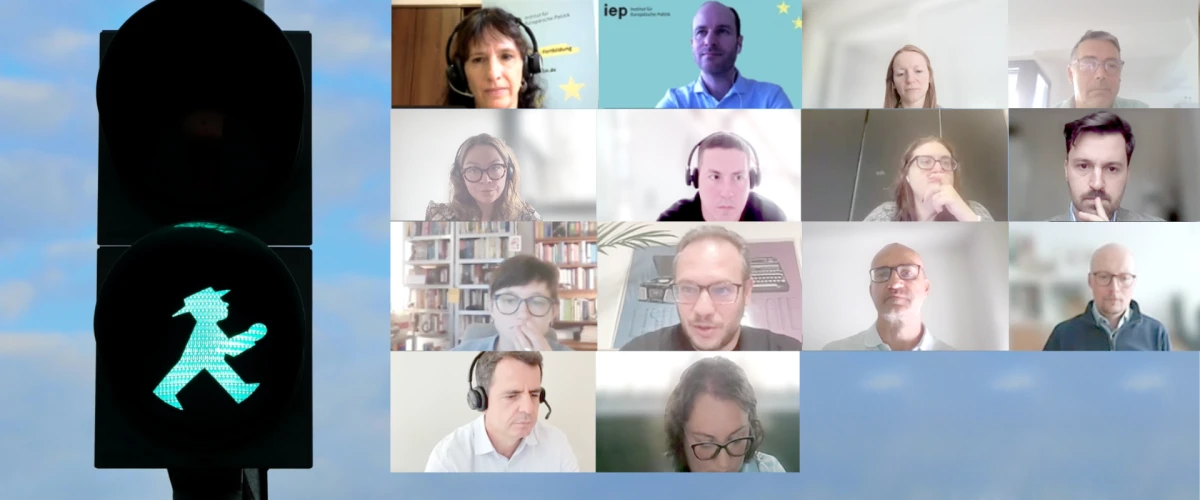
Montenegro’s and Albania’s EU prospects do not depend solely on progress with reforms and the fulfilment of formal accession criteria. EU accession is increasingly shaped by domestic political ownership, bilateral relations, security considerations, public communication and political dynamics within the EU. During the GuiDE Accession Diagnostic Event, policy experts and academics from the Western Balkans and Germany who specialise in EU enlargement in South-Eastern Europe, examined the political, institutional and societal factors shaping Montenegro’s and Albania’s accession processes and explored possible pathways to EU membership.
Montenegro, currently further advanced in the accession negotiations, benefits from a strong and long-standing pro-European political and societal consensus. At the same time, challenges remain, including difficulties in sustaining parliamentary majorities for key reforms, limited administrative capacity and an unresolved bilateral dispute with Croatia. Increasing occurrence of hybrid threats seek to derail Montenegro’s path towards the EU. It is necessary to start building up political support for ratification across all 27 EU Member States before the official closure of the accession negotiations.
In the case of Albania, key assets include very strong public support for EU membership, its full alignment with EU foreign policy and significant progress in justice reform. Risks include democratic challenges and difficulties in areas such as environmental legislation. The experts also stressed the importance of addressing bilateral issues proactively and tailoring communication to the priorities of individual EU Member States.
Germany can contribute through increased political and diplomatic engagement, support for credible reforms in the field of rule of law, and sustained cooperation with governments, parliaments and civil society.
The event was opened by IEP Director Funda Tekin and Klodjan Seferaj, Program Manager at Open Society Foundations – Western Balkans. Zoran Nechev, Senior Research Fellow at the IEP, moderated the discussion. Nenad Koprivica, a policy expert and researcher, spoke about Montenegro; Alba Çela, Executive Director of the Albanian Institute for International Studies, and Odeta Barbullushi, Resident Professor in the Department of European Transformation and Integration Studies at the College of Europe, spoke about Albania’s EU integration.
The event took place on September 11, 2026, with the kind support of the Open Society Foundations – Western Balkans.
Team & authors


 Share publication